7 Best Golf Swing Trainers for 2026
A golf swing trainer should make one part of practice clearer. That sounds simple, but the category mixes weighted tempo wands, release trainers, training clubs, and aids that provide a reference for your arms. They address different jobs, so I would not buy the most elaborate device and hope it happens to solve the right problem. First decide what you want to rehearse: a less hurried transition, a particular hand motion, or a more consistent relationship between your arms and body. Then choose a tool whose feedback you understand and whose size suits the place you will actually use it.
For this guide, I have focused on the differences that affect that decision: the form of feedback, whether the aid requires a ball, its handedness, its working and storage dimensions, and the instruction needed to use it purposefully. A long flexible trainer can suit an open practice area, while a compact grip or release aid may be easier to keep close at hand. Neither format earns a recommendation simply by promising extra yards. The useful purchase is one that fits a specific exercise and gives you a repeatable reference, with enough room afterward to judge what carries over to your normal club.
In this guide
Which Swing Trainer Fits Your Practice?
Orange Whip is my first choice for full-size tempo rehearsal, while SKLZ Gold Flex suits a simple warm-up routine. Choose Lag Shot when you want a training club that can hit real balls. ECOSEVEN is the compact right-handed grip option, IMPACT SNAP focuses on release practice, and Callaway Swing-Easy adds an arm-connection reference to your own club. SKLZ Smash Bag is the specialist choice for a ground-based impact target.
Pick 1 of 7
1. Orange Whip Full-Size Trainer
Best Full-Size Tempo Trainer

- 47-inch full-size trainer
- Flexible shaft
- Counterbalanced design
- Synthetic rubber grip
Pros
- Full-length motion rehearsal
- Weighted ends provide a distinct reference
- Flexible shaft for tempo practice
- Synthetic rubber grip
- Two-year warranty
Cons
- Needs substantial swing clearance
- Does not measure ball-flight results
Specifications
| Feature | Specification |
|---|---|
| Length | 47 in |
| Design | Counterbalanced |
| Shaft | Flexible |
| Grip | Synthetic rubber |
| Warranty | 2 years |
Our Detailed Review
A Clear Choice for Tempo Rehearsal
Orange Whip is my choice here for a golfer who wants a dedicated tempo tool and has room to rehearse a full motion. The 47-inch length gives it a very different role from a short grip trainer. Its counterbalanced design places weight at both ends of a flexible shaft, creating a physical reference through the movement. That is the reason to buy it: you want to work with the motion of the trainer, rather than stare at a screen or chase a numerical target after every repetition.
Give the Full-Size Trainer Proper Room
The synthetic rubber grip gives you a conventional place to hold the trainer, but the overall clearance requirement deserves attention before the purchase. Check the entire swing arc, including the finish, instead of measuring only the space in front of you. This is a full-size tool that stays full-size in storage. The two-year warranty is useful ownership support, although it does not replace care around ceilings, furniture, or other people. I would keep this one with the golf bag or in an open practice area.
Choose It for a Whole-Swing Routine
Against ECOSEVEN, the decision comes down to the kind of session you want. Orange Whip devotes its flexible shaft and full-length format to whole-swing rehearsal. ECOSEVEN adds a molded right-handed grip and compact storage for a different practice routine. I favor Orange Whip when tempo work is the main task and the size is no inconvenience. It gives you a distinct aid for that job, but it will not tell you where the ball went or establish that a particular swing change has improved your shots.
Pick 2 of 7
2. ECOSEVEN Retractable Swing and Grip Trainer
Best Compact Grip Trainer

- Right-handed molded grip
- 15.5-inch collapsed length
- Retractable stainless-steel shaft
- Click feedback
Pros
- Compact collapsed format
- Molded grip reference
- Audible feedback
- Bag and arm band included
- Reinforced resin head
Cons
- Right-handed grip only
- Click does not verify correct mechanics
Specifications
| Feature | Specification |
|---|---|
| Handedness | Right-handed |
| Collapsed Length | 15.5 in |
| Weight | 0.7 lb |
| Shaft | Retractable stainless steel |
| Grip | Molded non-slip rubber |
Our Detailed Review
A Small Trainer with a Defined Role
ECOSEVEN makes sense when you want a small practice aid with a clear hand-placement reference. Its molded rubber grip is specifically right-handed, so that detail should decide whether it belongs on your shortlist before anything else. The click feedback adds an audible cue during rehearsal. I see that as a prompt within a practice routine, not a verdict on the quality of a swing. A click alone cannot confirm where the clubface would point or where a real shot would finish.
Compact Storage Still Requires Swing Space
Storage is the main practical attraction. The retractable stainless-steel shaft allows a 15.5-inch collapsed length, and the stated weight is 0.7 pounds. That is a compact item to pack between sessions. Collapsed size is not the space required to swing it, though. Extend and use it according to its instructions, with clear surroundings and room for the entire movement. This is a rehearsal aid that needs no ball, so there is no reason to turn it into a hitting club or improvise impact drills.
Buy It for Convenient Rehearsal
A reinforced resin head completes the trainer, with an arm band and bag supplied alongside a manual. The bag is useful for keeping the small kit together. Those extras make it a different proposition from the full-size Orange Whip, whose appeal is its long flexible motion. Choose ECOSEVEN for the right-handed grip reference and compact packing, especially when a bulky trainer is likely to stay at home. Choose a full-length tempo aid instead when you specifically want that larger movement and have a suitable place to practice.
Pick 3 of 7
3. SKLZ Gold Flex 48-Inch Swing Trainer
Best Simple Warm-Up Trainer

- 48-inch flexible trainer
- Weighted ball head
- Black and yellow design
- Fits in a golf bag
Pros
- Straightforward tempo rehearsal
- No ball needed for practice
- Full-length flexible shaft
- Golf-bag storage
- One-year manufacturer warranty
Cons
- Long format needs open space
- No ball-striking feedback
Specifications
| Feature | Specification |
|---|---|
| Length | 48 in |
| Shaft | Flexible |
| Head | Weighted ball |
| Storage | Golf bag |
| Warranty | 1 year |
Our Detailed Review
A Straightforward Tool Before a Session
The Gold Flex is the straightforward pick for someone who wants a dedicated warm-up and tempo tool without additional attachments to manage. Its weighted ball head works with a flexible shaft, giving you a physical reference as you rehearse the movement. There is no ball to place and no target to set up for this kind of practice. I would choose it for a golfer who already knows the motion they want to rehearse and values an uncomplicated aid that can stay with the bag.
Full Length Is Part of the Decision
At 48 inches, the selected model deserves the same clearance planning as the full-size Orange Whip. That length can be convenient to carry alongside clubs, but it is a poor match for a cramped room where the follow-through would be restricted. Golf-bag storage is therefore more useful here than a claim of universal indoor convenience. Think of the Gold Flex as an aid for a suitable practice area, with enough room to move naturally, and you will have a more realistic expectation of how it fits the routine.
Keep the Choice Focused on Tempo
Orange Whip adds a specifically counterbalanced design, while the Gold Flex keeps the choice centered on its long flexible format and weighted head. I would not buy either solely on a promise of extra distance. The SKLZ model suits a simple rehearsal routine and has a one-year manufacturer warranty. Choose it when warm-up and tempo work are the jobs you want covered. Move to the Lag Shot instead when the important part of your session is seeing what happens after a training club actually strikes a ball.
Pick 4 of 7
4. Lag Shot 7-Iron Swing Trainer
Best for Ball-Striking Practice

- Right-handed standard 7-iron
- Highly flexible blue shaft
- Designed to hit real balls
- Video instruction included
Pros
- Combines rehearsal with ball striking
- Weighted clubhead
- Rubber grip
- Included video instruction
- Dedicated right-handed version
Cons
- Requires a suitable hitting area
- Training-club feel differs from a normal iron
Specifications
| Feature | Specification |
|---|---|
| Club Type | 7-iron trainer |
| Handedness | Right-handed |
| Shaft | Highly flexible |
| Grip | Rubber |
| Instruction | Video training included |
Our Detailed Review
A Trainer That Lets You Hit Shots
Lag Shot is the choice I would make when practice swings alone leave the important question unanswered: can you make the intended movement while actually hitting a ball? This 7-iron trainer is designed for real-ball use, with a weighted clubhead and a highly flexible shaft. That puts it in a different category from the tempo wands. You can move from rehearsal to a shot with the same tool, then judge the contact and flight in a suitable practice setting instead of relying only on the sensation of a swing.
Learn Its Motion with the Included Instruction
This is the standard right-handed version, with a blue shaft and a rubber grip. Choose that orientation deliberately, just as you would with an ordinary iron. The included video training is particularly relevant because a flexible training club is not simply another club to hit as hard as possible. Learn the intended exercise and use a range or a properly protected hitting area. The trainer supplies the club, not the mat, net, ball containment, or launch monitor that a home setup may also need.
Choose It When Ball Flight Matters
Against Orange Whip and Gold Flex, the reason to spend on Lag Shot is the ball-hitting design. Their role is rehearsal, while this club lets you bring an actual shot into the session. I would choose it for a golfer who has regular access to a hitting area and wants that additional feedback. It is less convenient when practice must stay ball-free or fit a small space. Keep your ordinary iron involved too, because the useful outcome is the practice you can carry back to it, not simply learning to swing a flexible trainer.
Pick 5 of 7
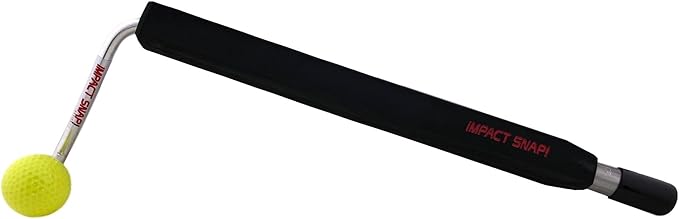
5. IMPACT SNAP Golf Swing Trainer
Best Specialist Release Trainer
- Right-handed release trainer
- Sliding internal weight
- Trailing-forearm ball feedback
- Clubhead attachment sold separately
Pros
- Focused hand and wrist practice
- Two physical feedback references
- Dedicated right-handed format
- Free manufacturer training program
Cons
- Specialist tool with a learning process
- Optional clubhead attachment costs extra
Specifications
| Feature | Specification |
|---|---|
| Handedness | Right-handed |
| Practice Focus | Hand and wrist release |
| Feedback | Sliding weight and forearm contact |
| Package | Trainer only |
| Optional Attachment | Clubhead sold separately |
Our Detailed Review
A Focused Tool for Release Practice
IMPACT SNAP earns its place when the practice task is specifically about hand and wrist release. This right-handed trainer keeps attention on that motion rather than the timing of a full-length shaft. I would choose it when a golfer has a clear release exercise to work through, ideally with someone able to explain the intended movement. That narrower purpose is a strength for the right buyer. It also makes the device a less natural starting point for someone who simply wants an uncomplicated warm-up aid.
Follow the Feedback Sequence
The sliding weight supplies one reference, while trailing-forearm contact from the attached ball supplies another. The manufacturer describes that contact as occurring after the impact motion. Work through the training sequence so those cues have a clear meaning, rather than forcing the device into a position because it seems to match an illustration. The free seven-day instruction program gives the aid a structured starting point. This is practice in understanding a movement, and that deserves more attention than collecting a high number of repetitions.
Choose It for a Specific Exercise
The clubhead attachment is sold separately, so this recommendation concerns the trainer itself. Against ECOSEVEN, the distinction is release-specific feedback versus a compact molded-grip rehearsal tool. Against Lag Shot, it is a focused motion exercise versus practice that includes striking a ball. Choose IMPACT SNAP when that specialist release work is the reason for the purchase. It is a purposeful addition to a defined practice plan, especially when you value physical cues and are willing to learn the sequence they are meant to support.
Pick 6 of 7
6. Callaway Swing-Easy
Best Simple Arm-Connection Aid

- Elastic neoprene band
- Right- and left-handed use
- Compact rolled storage
- Uses your existing club
Pros
- Simple physical arm reference
- Ambidextrous design
- Approximately wallet-size when rolled
- No separate training club needed
Cons
- Focuses on connection rather than ball-flight feedback
- Fit depends on the individual golfer
Specifications
| Feature | Specification |
|---|---|
| Format | Arm connection band |
| Material | Elastic neoprene |
| Handedness | Right- and left-handed |
| Storage | Rolls to approximately wallet size |
| Color | Orange |
Our Detailed Review
A Simple Reference with Your Own Club
Callaway Swing-Easy is the appealing choice when the practice goal is arm and body connection and you want to keep using your own club. The elastic neoprene band provides a physical reference around the arms, with a much simpler format than a weighted shaft or release device. I like the buying logic here: choose the aid that directly serves the exercise rather than adding mechanisms you do not need. Its role is to make that relationship part of the practice session, not to supply a different club to learn.
Easy to Pack for a Focused Exercise
The ambidextrous design works with right- and left-handed practice, which removes one of the version choices required by molded-grip trainers. It also rolls to approximately wallet size, so it is easy to keep with other small practice accessories. The next consideration is personal fit. Position it as instructed and keep the exercise comfortable instead of assuming that tighter restriction means better practice. This small format is particularly sensible when you already bring your normal clubs to a range and want an aid that adds little packing bulk.
Choose Simplicity Over Extra Mechanisms
Against IMPACT SNAP, the choice is a broad arm-connection reference versus a specialist release sequence. Against the full-size tempo trainers, the connection band changes the exercise while leaving your existing club in your hands. Choose Swing-Easy for that simple role and convenient storage. It is the most straightforward option here for a golfer whose practice plan calls for an arm reference, and it can fit easily into a session without becoming the center of the entire routine.
Pick 7 of 7
7. SKLZ Smash Bag
Best for Impact-Position Practice

- Unfilled impact bag
- Printed target map
- Zipper closure
- Ground-staking loop
Pros
- Use with your existing club
- Visible target reference
- Accepts soft household filler
- Loop for outdoor anchoring
- Zipper access for filling
Cons
- Suitable filler is not included
- Bulky to store when filled
Specifications
| Feature | Specification |
|---|---|
| Format | Unfilled impact bag |
| Filler | Loose clothes, towels or blankets |
| Target | Printed map |
| Anchoring | Ground-staking loop |
| Closure | Zipper |
Our Detailed Review
A Ground-Based Reference for Impact Work
The Smash Bag suits a practice plan built around contact with a fixed target. Its printed target map gives you a visible reference, and you use your existing club for the exercise. That makes it quite different from a flexible tempo wand or molded-grip aid. I would choose it when impact-position practice is the task you want to work on and you understand the intended drill. It earns its place as a focused training target, rather than as another object to swing through the air.
The Filling Is Part of the Setup
This is an unfilled bag, so plan for suitable soft contents before the first session. The instructions call for a loose fill of clothes, towels, or blankets, with zipper access to the interior. Sand, water, and cement are specifically unsuitable. That setup is part of how the product is intended to work, not a chance to make the target arbitrarily heavier. A ground-staking loop provides an anchoring option outdoors. Leave room for the club movement and follow the prescribed exercise rather than treating the bag as a maximum-effort striking challenge.
Choose It for a Deliberate Contact Exercise
Choose the Smash Bag over Lag Shot when the exercise calls for contact against a target map rather than a ball that travels. Choose Lag Shot when actual shot feedback is central to the session. The bag can be convenient in a dedicated practice area, but its filled bulk is a real consideration if everything must be packed away afterward. For a golfer who wants a deliberate impact reference and has somewhere to keep it, this is a practical specialist tool with a clear role.
How to Choose a Golf Swing Trainer
The strongest choice is usually the aid that addresses one clear task with the least friction. Work through the type of feedback, your practice area, and the exact version before comparing extras.
Practice Goal
Give the purchase a specific job. A tempo aid, a hand-position reference, and an arm-connection aid do not provide interchangeable feedback. Describe what you want to practice in one sentence, then check that the tool actually supports it. For example, rehearsing a smoother transition is a different task from learning how to place your hands on a grip. An instructor can help turn a vague complaint about inconsistent shots into an appropriate exercise. Buy around that exercise instead of assuming a more complicated trainer will cover every possibility.
Feedback Type
Decide what you want to notice during a repetition. You may prefer the movement of a flexible shaft, an audible cue, or contact with a physical reference. The important part is knowing what the cue means within the exercise. A sound does not measure clubface angle, and keeping an aid in place does not establish where the ball will go. Look for instructions that explain both the intended response and the setup. A tool is much easier to use purposefully when its feedback is specific enough to interpret.
Practice Space
Check the full movement you intend to make, including behind you and through the finish. A compact storage length is convenient in a drawer or bag, but it is not a clearance measurement. Full-length trainers need space comparable to the motion they are intended to rehearse. Keep other people outside the area and follow the device instructions. If the exercise involves a real ball, plan for suitable ball containment as well. Choose a format that fits the available area instead of shortening an exercise awkwardly just to accommodate the equipment.
Handedness and Fit
Handedness matters whenever the trainer uses a shaped grip or a device-specific release position. Select the correct version before considering color or accessories. Full-size, compact, and junior products can also look similar in a thumbnail while serving different users. Check the actual dimensions and the way the aid is held. An attachment that changes the package may be optional, so decide whether the basic product already covers your exercise. The best fit is the one you can use comfortably according to its instructions, without forcing your body around it.
Routine and Carryover
Think beyond the first few sessions. A tool that is easy to carry, set up, and put away has a better chance of becoming part of a routine you maintain. Keep that routine focused: rehearse the intended reference, then return to your usual club and assess the relevant result. Avoid treating the sensation from a training device as the final goal. What matters is whether the exercise helps you practice purposefully. When the feedback is confusing or uncomfortable, revisit the instructions or get coaching rather than adding speed and more repetitions.
Golf Swing Trainer Comparison Table
| Product | Best For | Practice Focus | Feedback | Ball Required | Setup |
|---|---|---|---|---|---|
| Orange Whip Full-Size Trainer | Best Full-Size Tempo Trainer | Tempo rehearsal | Flexible, counterbalanced motion | No | Room for a 47-inch trainer |
| ECOSEVEN Retractable Swing and Grip Trainer | Best Compact Grip Trainer | Grip and swing rehearsal | Molded grip and click | No | Right-handed; extend before use |
| SKLZ Gold Flex 48-Inch Swing Trainer | Best Simple Warm-Up Trainer | Warm-up and tempo | Flexible shaft and weighted head | No | Room for a 48-inch trainer |
| Lag Shot 7-Iron Swing Trainer | Best for Ball-Striking Practice | Ball-striking practice | Flexible training club and resulting shot | Optional; can hit real balls | Right-handed; suitable hitting area |
| IMPACT SNAP Golf Swing Trainer | Best Specialist Release Trainer | Hand and wrist release | Sliding weight and forearm contact | No | Right-handed; learn the instruction sequence |
| Callaway Swing-Easy | Best Simple Arm-Connection Aid | Arm and body connection | Elastic band reference | Depends on exercise | Your own club; right- or left-handed |
| SKLZ Smash Bag | Best for Impact-Position Practice | Impact-position exercise | Printed target map | No | Your own club and loose soft filler |
How We Evaluated the Swing Trainers
The comparison begins with what each aid asks a golfer to do and what feedback it gives in return. Whole-swing rehearsal, grip positioning, and release practice involve different decisions, so I do not treat every trainer as a competing solution to the same problem. The aim is to identify useful roles and explain which buyer should care about each one. A clear purpose earns more weight than broad promises about distance, consistency, or correcting several unrelated swing faults at once.
Construction and dimensions matter where they change the practice experience. Full-length shafts, compact packing, molded grips, and optional attachments affect where an aid can be used and how much preparation it requires. I also consider whether the product is for rehearsal or designed to strike balls. Those details shape the practical recommendation: an aid can be well suited to its intended job and still be inconvenient for a particular room, golfer, or routine. More accessories do not automatically make it the stronger purchase.
The final judgment is about fit for a defined task rather than a promise of lower scores. Manufacturer instructions establish the intended use, while the comparisons explain the consequences of the design and the limitations of its feedback. A trainer can supply a reference without diagnosing the whole swing. That distinction matters especially for audible cues and movement sensations. Choose a manageable exercise, use the correct product version, and judge the practice in the context of your regular golf shots.
Frequently Asked Questions
What is the best type of golf swing trainer for a beginner?
Start with the skill you are learning. A grip reference may suit hand placement, while a tempo aid supports a different kind of rehearsal. There is no need to collect several devices before understanding the first. Ask for a simple exercise, choose the correct handedness and size, and make sure you can explain what its feedback is supposed to tell you.
Can you use a golf swing trainer indoors?
Some formats are easier to accommodate indoors, but the available space must suit the complete movement. Check ceiling height and clearance behind, beside, and in front of you. A short packed length does not establish safe working space. Follow the instructions, and use a different practice area when the required motion cannot be completed with clear surroundings.
Do you need to hit golf balls with a swing trainer?
Only when the particular trainer and exercise are designed for ball striking. Many aids are for rehearsing movement without a ball. A training club that can hit balls has a different role and needs an appropriate range or protected hitting area. Confirm the intended use of the exact product instead of assuming that anything with a grip can strike a ball.
Does a click or correct-feeling motion mean your swing is fixed?
No. It is feedback from that device during that exercise, not a complete measurement of the swing or the resulting shot. Use the cue as intended, then return to your ordinary club and assess the skill you are working on. If the cue is confusing, coaching or a clearer drill is more useful than simply repeating it faster.
Final Thoughts
Choose a golf swing trainer by the job it will do in your routine. The useful questions are straightforward: what reference will it provide, where can you use it, and how will you decide whether the exercise is helping? Once those answers are clear, the differences between a full-length tempo tool and a compact specialist aid become easier to judge. I would rather have one well-chosen device with a clear purpose than a bag full of training aids that all demand different swing thoughts.
Give practical fit as much attention as the headline promise. Correct handedness, comfortable use, adequate clearance, and straightforward storage will matter long after the initial interest wears off. Follow the intended exercise and keep a place in the session for your normal club. That makes the trainer part of deliberate practice instead of an end in itself. Buy the format you can use consistently and understand clearly, with expectations tied to the task rather than a guaranteed score or distance gain.