6 Best Putting Aids for 2026
A putting aid earns its place when it makes a specific part of practice easier to understand. You might need a clearer starting line, a way to check your setup, or a target that turns pace control into a repeatable challenge. Those are different jobs, and buying the most complicated tool does not automatically cover them all. My first question is what you want to notice during the next ten putts. Once that is clear, it is much easier to choose between a mirror, an adjustable gate, a target, and a device that gives you a physical reference during the stroke.
These six aids are compared around that practical choice. I have looked at the reference each one provides, how it fits a putting green or home practice area, and what comes in the exact package. Some work with your own putter and ordinary balls. Others change the target or the ball itself to create a more specific exercise. A portable tool also needs a sensible setup routine, not just small dimensions. Choose the aid you can position consistently and interpret clearly, then leave some time to putt without it so the practice remains connected to the game you want to play.
In this guide
Which Putting Aid Fits Your Practice?
Choose EyeLine for a compact view of your setup, or WhyGolf Putting Thing for adjustable references around the putter and ball. PuttOUT Premium Pressure supplies a portable pace target, while GoSports’ ten-foot string suits a chosen starting-line exercise on the practice green. Putt Master adds a physical wrist-pad reference during the stroke. Devil Ball creates a face-delivery challenge within a small two-ball kit.
Pick 1 of 6
1. Orange Whip Putt Master
Best for Stroke Awareness

- Adjustable wrist pads
- Central adjustment button
- Right- and left-handed use
- Uses your own putter
Pros
- Pads adjust independently
- Supports different grip orientations
- Physical reference during the motion
- Compact trainer format
Cons
- Pad positioning takes familiarization
- Does not supply a target or pace challenge
Specifications
| Feature | Specification |
|---|---|
| Adjustment | Sliding wrist pads; central button |
| Handedness | Right- and left-handed |
| Grip Options | Conventional and cross-handed positions |
| Package | Trainer only; putter not included |
Our Detailed Review
A Physical Reference During the Stroke
Orange Whip Putt Master is the choice I would make when the exercise is about how the putting motion feels rather than where a target is placed. Its adjustable wrist pads provide a physical reference while you use your own putter. That gives it a distinct role beside mirrors and gates, which stay on the practice surface. The appeal is direct: the aid is involved in the motion itself, so you can focus on the relationship between your hands, arms, and putter during a defined exercise.
Take Time to Position the Pads
The central adjustment button lets each pad slide into position, and the manufacturer illustrates both right- and left-handed grips, including cross-handed variations. That flexibility is useful, but good setup still matters. Work through the instructions and find the intended pad position instead of simply squeezing the device tightly. The official guidance recommends short sessions that alternate between using the aid and putting without it. I like that approach for this type of tool because it keeps the physical reference connected to your ordinary stroke.
Choose It for a Defined Motion Exercise
Against WhyGolf’s ground-based gates, the Putt Master’s wrist-pad design serves a different purpose. Choose it when a specific motion exercise calls for that contact reference. Choose a gate or alignment tool when the immediate task is checking where the putter or ball starts. The compact trainer also avoids adding a separate practice target to the floor, although your own putter is still required for putting practice. I would buy it for a clear stroke-awareness routine, with time to learn the position and compare the sensation with normal putting.
Pick 2 of 6
2. WhyGolf Putting Thing
Best Adjustable Gate System

- Adjustable ball and putter gates
- 1/16-inch aluminum-alloy body
- Alignment rail included
- Travel bag included
Pros
- Two adjustable gate references
- Thin metal construction
- Alignment rail supplied
- Travel bag keeps components together
Cons
- More setup choices than a simple target
- Needs deliberate gate spacing and alignment
Specifications
| Feature | Specification |
|---|---|
| Body | Aluminum alloy |
| Thickness | 1/16 in |
| Gates | Adjustable ball and putter gates |
| Alignment | Included rail |
| Storage | Travel bag |
Our Detailed Review
Put the Reference Where the Stroke Happens
WhyGolf Putting Thing is my choice for someone who wants adjustable references around both the putter and the ball. The ball and putter gates let you define the exercise instead of accepting one fixed opening. Its 1/16-inch aluminum body keeps the main structure thin on the practice surface. That combination makes sense when you want a repeatable setup for starting-line and contact work. You can position the device, establish the intended line, and use the same reference for a sequence of putts.
Adjust One Challenge at a Time
The alignment rail adds a visible guide, while the travel bag keeps the components together between sessions. I would start with one gate challenge at a time, leaving enough clearance to understand the feedback before making the opening more demanding. A gate only tells you something useful when it is aligned with the exercise you intended. Taking a moment to position the station consistently is worthwhile here, especially if the kit moves between a home putting surface and a practice green.
Choose It for a Repeatable Practice Station
Choose Putting Thing over Putt Master when you want the feedback on the ground rather than against your wrists. The adjustable gates make it a more configurable practice station, with a corresponding need to decide what each part is checking. That is a good tradeoff for a golfer who enjoys a structured routine and wants to repeat the same setup. It is less compelling when all you need is a single pace target. Buy this version for its rail, two gate references, and practical carrying arrangement, not simply for having more components.
Pick 3 of 6
3. PuttOUT Premium Pressure Putt Trainer
Best Portable Pace Target

- 4.25-inch target base
- Parabolic return ramp
- Pop-down micro-target
- Folds for storage
Pros
- Hole-sized main target
- Smaller challenge within the ramp
- Three additional aiming dots
- Alignment-stick holder
- Compact folding design
Cons
- Mat, balls and alignment stick are separate
- Missed putts still need collecting
Specifications
| Feature | Specification |
|---|---|
| Base Diameter | 4.25 in |
| Ramp | Parabolic return design |
| Precision Target | Pop-down micro-target |
| Storage | Folding |
| Variant | Stone; single trainer |
Our Detailed Review
Put the Challenge at the End of the Roll
PuttOUT Premium Pressure is the target I would choose when the session needs a clear pace-and-line challenge without a large practice station. The 4.25-inch base provides a hole-sized reference, while the parabolic ramp receives the ball and lets it roll back down. That keeps the focus at the end of the putt, unlike a guide positioned around the putter. It is a useful format when you already have a suitable putting surface and want to give a short series of rolls a defined target.
A Smaller Target When You Want It
The pop-down micro-target creates a narrower challenge within the ramp, and three small dots on the base offer additional aiming references. I would use the larger target first, then introduce the smaller challenge when it serves the exercise. The folding design makes the trainer easy to put away after a session, which is a real advantage when the practice area is also a hallway or living space. This single Stone version supplies the target itself, so plan around the mat and balls you already use.
Choose It for an Easy-to-Pack Routine
An alignment-stick hole near the top adds another setup option if you already own a suitable stick. The stick is separate, and I would not buy one solely to make the trainer more elaborate. Choose this PuttOUT over WhyGolf’s adjustable gates when the goal is a portable destination for the putt rather than a reference around impact. It is my preference for an easy-to-pack target with a smaller challenge available. Keep expectations practical: balls that miss the device still need collecting, and the practice surface remains part of the exercise.
Pick 4 of 6
4. EyeLine Golf Putting Alignment Mirror
Best Compact Setup Mirror

- 5.75 × 11.75 inches
- Eye and putter-face references
- Putter-gate slots
- Carry bag included
Pros
- Compact view of address position
- Right- and left-handed use
- Slots for a putter gate
- Included carry bag
Cons
- Shoulder view requires a separate mirror
- Indoor putting posts are separate
Specifications
| Feature | Specification |
|---|---|
| Dimensions | 5.75 × 11.75 in |
| Handedness | Right- and left-handed |
| References | Eye position and putter-face alignment |
| Gate Setup | Tees or separate indoor posts |
| Storage | Carry bag |
Our Detailed Review
See the Setup You Are Working On
EyeLine’s small Putting Alignment Mirror is the one I would choose when a clear view of address is more useful than another target down the line. Its 5.75 × 11.75-inch format combines a compact footprint with eye-position and face references. That makes it a practical tool for checking a setup you are trying to repeat. Place it on the intended line, use the reflection and markings deliberately, and keep the exercise specific. The advantage is being able to see a position instead of relying entirely on how it feels.
Add a Gate When the Exercise Calls for It
The putter-gate slots let you add another reference using tees on a suitable outdoor surface or separate indoor posts. That is useful flexibility, but the posts are not part of this basic package. I would start with the setup view before adding a gate, so each piece has a clear job. The carry bag is included, making the small mirror easy to keep with a portable practice kit. Pack it carefully between sessions so the reflective surface stays useful rather than becoming a loose accessory among clubs and tees.
Choose Portability with a Clear View Limit
The ambidextrous design is convenient for right- and left-handed golfers, but the small mirror does not show the shoulders without a separate shoulder mirror. That is the limit I would accept in exchange for portability. Choose EyeLine over Putting Thing when the reflection itself is the useful reference, and choose PuttOUT’s pressure target when you want the challenge at the end of the roll. For a golfer who wants a compact address check with the option of a putter gate, this version is a focused and practical choice.
Pick 5 of 6
5. GoSports Down the Line Putting String Guide
Best Outdoor Starting-Line Guide
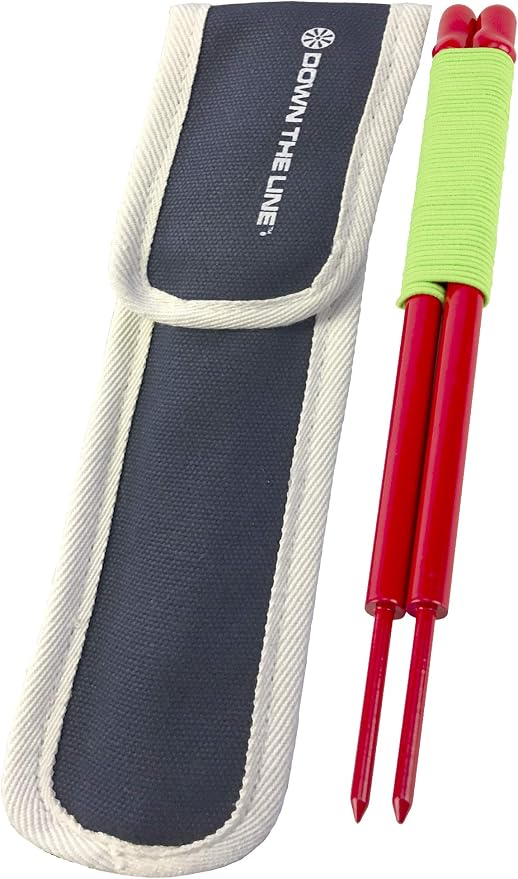
- 10-ft overhead string
- Two metal stakes
- Travel carrying case
- Chosen start-line reference
Pros
- Visible reference above the ball
- Ten-foot working length
- Stakes included
- Compact carrying case
Cons
- Needs a suitable surface for staking
- Does not determine the green’s break
Specifications
| Feature | Specification |
|---|---|
| String Length | 10 ft |
| Supports | 2 metal stakes |
| Reference | Overhead starting line |
| Surface | Suitable ground for stakes |
| Storage | Travel carrying case |
Our Detailed Review
A Long Reference for the Starting Direction
GoSports Down the Line is the guide I would take to a practice green when the main task is seeing the chosen starting direction clearly. Its 10-ft string sits above the putting surface, giving you a longer reference than a small guide beside the ball. The appeal is simplicity. You establish the line for the exercise, position the string, and work beneath that visible reference. It is particularly useful when you want the setup to remain easy to understand rather than surround the putter with several separate adjustments.
Use the Stakes on an Appropriate Surface
The kit includes two metal stakes and a travel carrying case. The stakes make suitable ground part of the setup, so I would choose this for a practice green rather than assume it can stand unsupported on an indoor mat. Take care to align the reference with the exercise before beginning the batch of putts. On a breaking putt, the string represents the starting direction you have chosen. It does not turn that straight reference into the curved route the ball follows as the slope takes effect.
Choose It for Practice-Green Sessions
Choose the overhead string over the EyeLine mirror when you want a visible line extending beyond the immediate address area. Choose the mirror when the reflection of your setup is the useful feedback. The GoSports kit also differs from a pace target: it establishes a reference along the start of the putt rather than a challenge at the destination. For a golfer who regularly uses a practice green, the ten-foot format and included case make a focused, portable kit. Its value comes from the clear line and simple routine.
Pick 6 of 6
6. PuttOUT Devil Ball Face Angle Trainer
Best Face-Delivery Challenge

- Two shaped putting balls
- Flat-edged impact zone
- Three difficulty orientations
- Marker and pouch included
Pros
- Challenge built into the ball
- Three orientation options
- Two balls supplied
- Alignment marker included
- Travel pouch included
Cons
- Deliberately differs from an ordinary putting ball
- Needs correct orientation for the chosen challenge
Specifications
| Feature | Specification |
|---|---|
| Quantity | 2 Devil Balls |
| Impact Zone | Flat-edged |
| Difficulty | 3 ball orientations |
| Setup Aid | Alignment marker |
| Storage | Travel pouch |
Our Detailed Review
Make the Ball Part of the Exercise
Devil Ball is the aid I would choose when the practice goal is a more demanding face-delivery exercise without adding a gate system to the floor. Its flat-edged impact zone is designed to magnify differences in how the putter meets the ball. This set supplies two shaped balls, so the challenge is contained in a very small kit. That is an appealing alternative when you already have a putting surface and want a specific exercise that is easy to bring out for a short session.
Choose an Orientation You Understand
The three difficulty orientations let you change which part of the ball faces the putter. The flatter contact section creates the more demanding setup, while a rounder section provides a different starting point. Use the alignment marker to establish the exercise consistently and learn what each orientation is intended to show. I would begin with the version of the challenge that produces understandable feedback, then progress deliberately. The point is to practice a defined delivery task, not to make every putt frustrating simply because a harder setting exists.
Choose It for a Compact Face Challenge
The travel pouch keeps the two balls and marker together, making this one of the simplest kits here to carry between sessions. Choose Devil Ball over the Premium Pressure trainer when you want the challenge at contact rather than at the end of the roll. Choose the pressure target when you prefer to keep your ordinary ball and change the destination instead. I would use Devil Ball for short, focused practice and then return to a regular ball. That makes its altered shape a useful exercise rather than a substitute for every part of putting.
How to Choose Putting Aids
Choose a tool for the part of practice you want to make clearer. The best purchase is usually the one whose feedback you can explain before the first putt.
Practice Focus
Give the aid one initial job. A setup reference, a starting-line gate, and a pace target answer different questions, so decide which one matters for the current exercise. For example, rolling through a chosen opening is a more specific task than trying to improve everything about a stroke at once. Once the first reference is useful, you can add another. Starting simply also makes it easier to tell whether a miss came from the exercise you are testing or from a poorly positioned piece of equipment.
Feedback You Can Interpret
Think about what the tool will show or let you feel. A mirror gives a view of your setup, while a gate provides a boundary and a target can create a defined result at the end of a putt. None interprets the entire stroke for you. Choose feedback that fits the instructions or coaching you are following. A demanding challenge is useful when you understand it. Making a task smaller or harder simply to increase the difficulty is less helpful when the meaning of each result remains unclear.
Practice Surface
Match the setup to the surface you will use most. A staked string needs suitable support, while a portable target or flat guide has a different relationship with a mat or green. Check that the equipment sits as intended and leaves room for the putter to move. A consistent surface makes a repeatable drill easier to organize. If you practice outside, also choose the line deliberately rather than assuming a visual guide automatically accounts for the slope between the ball and the hole.
Adjustment and Accessories
Adjustable gates are valuable when you want to vary the challenge or fit the exercise to your putter. They also add decisions, so consider whether you will use that flexibility. Check the exact package for the parts needed at home or outdoors, including posts, bags, balls, and any optional mirror. A compact base tool can suit frequent travel, while a larger kit may be more convenient left in a dedicated practice area. Buy the parts required for the routine instead of collecting accessories without a clear purpose.
Routine and Portability
An aid that is quick to position and easy to pack has a better chance of being used regularly. Think through the full session: setting the reference, completing a small group of putts, and returning to ordinary putting. Storage matters too, particularly when several small components travel together. Choose the format that fits where you practice and how often you move it. The aim is a manageable routine, with enough unaided putting afterward to keep the exercise in the context of the broader game.
Putting Aid Comparison Table
| Product | Best For | Practice Focus | Reference | Setup | Storage |
|---|---|---|---|---|---|
| Orange Whip Putt Master | Best for Stroke Awareness | Stroke awareness | Adjustable wrist pads | With your own putter; learn pad position | Compact trainer |
| WhyGolf Putting Thing | Best Adjustable Gate System | Start line and contact | Adjustable ball/putter gates | Position the rail and gate spacing | Travel bag |
| PuttOUT Premium Pressure Putt Trainer | Best Portable Pace Target | Pace and target challenge | Ramp with micro-target | Suitable putting surface; own ball | Folds |
| EyeLine Golf Putting Alignment Mirror | Best Compact Setup Mirror | Address setup | Eye and face alignment mirror | Tees or separate posts for gate use | Carry bag |
| GoSports Down the Line Putting String Guide | Best Outdoor Starting-Line Guide | Chosen starting direction | 10-ft overhead string | Suitable ground for two stakes | Carrying case |
| PuttOUT Devil Ball Face Angle Trainer | Best Face-Delivery Challenge | Face delivery | Shaped impact zone | Choose ball orientation; use marker | Travel pouch |
How We Evaluated the Putting Aids
The comparison separates putting aids by the job they are designed to perform. Setup, starting direction, pace, and stroke sensation are related parts of practice, but one tool does not necessarily address them in the same way as another. I look for a clear connection between the design and the exercise. The recommendations explain that connection so a buyer can choose a useful reference rather than relying on a broad promise of fewer putts.
Practical details receive the same attention as the main training feature. Gate adjustment, surface requirements, included accessories, and carrying arrangements can determine whether an aid fits a regular routine. The exact package matters especially when separate posts, mirrors, or balls change how a product is used. Comparisons therefore focus on what the buyer can set up with the chosen version and what preparation the exercise still requires. More pieces are worthwhile only when they add a reference the golfer actually wants.
The final judgment is about suitability for a defined practice task. A target result or physical cue is useful feedback, but it does not establish a universal putting technique or guarantee a particular score improvement. Clear instructions and consistent positioning matter because they give the result meaning. I favor a tool that makes one exercise understandable and repeatable, with a straightforward path back to putting without the aid, over a device whose complexity becomes the whole session.
Frequently Asked Questions
What putting aid should a beginner start with?
Start with the part of setup or practice you want to understand. A simple target can make pace work more structured, while a visual reference can help you check an intended line. Choose one clear exercise and learn what its feedback means. There is little advantage in adding several aids before you know what the first one is checking.
Can putting aids be used on an indoor mat?
Many portable targets and flat guides can suit an appropriate mat, but the exact setup matters. A tool that uses stakes may need different support, and optional indoor posts can change how a mirror is used. Check the package and instructions for your surface. Leave enough room for the putter and a useful length of roll.
Does a putting mirror tell you the correct stroke?
A mirror provides a view of your setup and reference markings. It can help you check a position you are working on, but that is different from diagnosing every part of the stroke or reading the green. Use it around a clear setup goal, then assess the ball’s result separately. It is most useful when you know what you are looking for.
How should you practice with a putting aid?
Use a short, repeatable exercise with one clear reference. Position the aid consistently, complete a manageable group of putts, and note the result the tool is designed to show. Then putt without it. If the feedback is confusing, return to the instructions or coaching goal instead of simply making the challenge harder or repeating more shots.
Final Thoughts
Choose a putting aid for the reference you need, not for the longest list of promised improvements. A well-positioned gate, target, mirror, or physical cue can give a simple exercise more structure. The important decision is which part of practice you want to make clearer and whether the tool fits the place you will use it. Once that is settled, package details and portability become useful ways to decide between otherwise appealing options.
I would keep the routine manageable and the feedback specific. Set up carefully, work through the intended exercise, and leave time for ordinary putting afterward. That makes the equipment part of practice rather than a separate skill you are learning for its own sake. Buy the aid whose purpose you understand and whose setup you can repeat easily. A clear task and a tool you actually bring to the session are a stronger combination than an elaborate kit left unused.